
Regulatory shifts for autonomous agents
The landscape of AI trading compliance in 2026 marks a definitive end to the era of voluntary guidelines. Regulatory bodies across major jurisdictions are moving to enforce mandatory oversight for autonomous trading systems, treating them with the same scrutiny applied to traditional financial infrastructure. This shift is driven by the increasing complexity of algorithmic decision-making and the systemic risks posed by high-frequency autonomous agents.
Central to this transition is the European Union’s AI Act, which comes into full effect in 2026. Under this framework, AI systems used for trading activities, particularly those involving sanctions screening or automated due diligence, are classified as "high-risk applications." This classification imposes strict obligations on developers and deployers, including rigorous risk assessments, data governance standards, and human oversight requirements. The goal is to ensure that autonomous agents do not operate in a regulatory vacuum.
While the EU sets a stringent baseline, other jurisdictions are adapting their frameworks to address similar concerns. The financial sector is increasingly viewed as a high-stakes environment where AI compliance is non-negotiable. Regulators are focusing on the transparency of algorithmic logic and the ability to audit autonomous decisions in real-time. This move from soft law to hard regulation creates a more uniform, albeit complex, global standard for AI trading compliance 2026.
The implications for financial institutions are significant. Compliance teams must now integrate legal requirements directly into the development lifecycle of trading algorithms. This includes documenting data sources, validating model accuracy against regulatory benchmarks, and establishing clear protocols for human intervention when autonomous systems exhibit anomalous behavior. The focus is no longer just on financial performance but on regulatory resilience.
Mandatory audit trails and explainability
The era of the "black box" in algorithmic trading is ending. Under the 2026 AI trading compliance framework, regulators no longer accept "the model decided" as a valid explanation for trade execution. Financial institutions must now provide clear, auditable reasoning for every automated decision, shifting the burden from post-hoc justification to pre-execution transparency.
This requirement targets the core mechanics of autonomous agents. Regulators in major jurisdictions, including the EU and US, are demanding that trading algorithms expose the logic behind their actions. This means systems must generate detailed logs that link specific market conditions to trade orders, ensuring that human overseers can reconstruct the decision path. The goal is to prevent opaque models from executing trades based on hidden biases or unstable data patterns.
Legacy systems often treated AI reasoning as an internal secret, offering only trade blotters without context. This approach is now non-compliant. New standards require that AI tools provide granular explainability, detailing why a specific asset was bought or sold at a given millisecond. Without this visibility, firms risk regulatory penalties and operational blind spots.
The shift from opaque algorithms to transparent, auditable systems is a fundamental change in market infrastructure. Firms that fail to implement robust explainability features will find themselves unable to meet the new reporting standards.

Legacy vs. Compliant Systems
The difference between older trading architectures and 2026-compliant systems is stark. The table below highlights the key operational shifts required for adherence to new AI trading compliance 2026 standards.
| Dimension | Legacy Black-Box | 2026 Compliant |
|---|---|---|
| Auditability | Minimal or none | |
| Auditability | Full decision path logs | |
| Latency | Optimized for speed only | |
| Latency | Balanced with explainability overhead | |
| Regulatory Reporting | Post-trade summaries | |
| Regulatory Reporting | Real-time reasoning traces |
Risk guardrails and circuit breakers
As autonomous agents execute trades at machine speed, the risk of cascading errors or market manipulation increases exponentially. Regulatory bodies in 2026 are mandating that these agents operate within strict, hard-coded boundaries to prevent flash crashes and ensure market integrity. For firms pursuing AI trading compliance 2026 standards, implementing robust risk guardrails is no longer optional—it is a foundational requirement for deployment.
1. Hard-coded risk limits
Autonomous agents must have pre-defined thresholds for position size, maximum drawdown, and daily loss limits. These limits are embedded directly into the agent’s execution logic, preventing it from exceeding regulatory or internal risk tolerances regardless of market conditions. Unlike soft alerts that can be overridden, hard limits act as absolute barriers, ensuring that an agent cannot inadvertently accumulate excessive exposure or violate capital adequacy requirements.
2. Circuit breakers and kill switches
Circuit breakers are automated mechanisms that halt trading activity when specific anomaly indicators are triggered. These triggers include unusual volatility spikes, rapid order cancellation rates, or deviations from expected behavior patterns. A kill switch provides an immediate, manual override for human operators to shut down an agent entirely if it begins to behave erratically or if a systemic market event occurs. This dual-layer approach ensures that both automated and human interventions can stop potential harm before it escalates.
3. Human-in-the-loop protocols
For high-stakes transactions or activities outside the agent’s predefined scope, human-in-the-loop (HITL) protocols require explicit human approval before execution. This is particularly critical for trades involving large volumes, sensitive assets, or complex financial instruments. HITL protocols serve as a final check against algorithmic errors or unintended consequences, ensuring that human judgment remains integral to the trading process. Regulatory guidelines emphasize that HITL does not mean constant supervision, but rather targeted intervention where risk is highest.
4. Real-time monitoring and audit trails
Continuous monitoring of agent behavior is essential for maintaining AI trading compliance 2026 standards. All trading decisions, risk limit breaches, and circuit breaker activations must be logged in an immutable audit trail. This data allows regulators and internal compliance teams to review agent actions in real-time and post-event. Real-time dashboards provide visibility into agent performance and risk exposure, enabling proactive management rather than reactive damage control.
-
Hard-coded position and loss limits embedded in execution logic
-
Automated circuit breakers triggered by volatility or anomaly indicators
-
Manual kill switches for immediate human intervention
-
Human-in-the-loop approval for high-stakes or out-of-scope trades
-
Immutable audit trails for all agent actions and risk events
The integration of these guardrails ensures that autonomous agents operate safely within the regulatory framework. As the landscape of AI trading evolves, firms that prioritize these operational requirements will be better positioned to manage the complexities of 2026 compliance standards.
How jurisdictions handle AI trading compliance 2026
The path to AI trading compliance 2026 is not uniform. While the framework exists, enforcement priorities and regulatory definitions diverge significantly across major markets. Understanding these jurisdictional differences is essential for any autonomous agent operating across borders.
The European Union leads with a risk-based approach under the EU AI Act. High-risk AI systems in financial services face strict transparency and governance requirements. Firms must maintain detailed documentation of model training data and decision-making processes. This creates a high barrier to entry but offers legal clarity for compliant agents.
In the United States, the landscape is fragmented. There is no single federal AI law yet. Instead, agencies like the SEC and CFTC apply existing securities and commodities laws to algorithmic trading. This case-by-case enforcement creates uncertainty. Some states, like Utah, have passed their own AI policy acts, adding another layer of complexity for multi-state operations.
The UK takes a principles-based approach, relying on existing financial regulators to adapt current rules. This allows for faster innovation but less specific guidance on AI. Firms must interpret how general conduct rules apply to autonomous agents. This flexibility can be an advantage but requires careful legal interpretation.
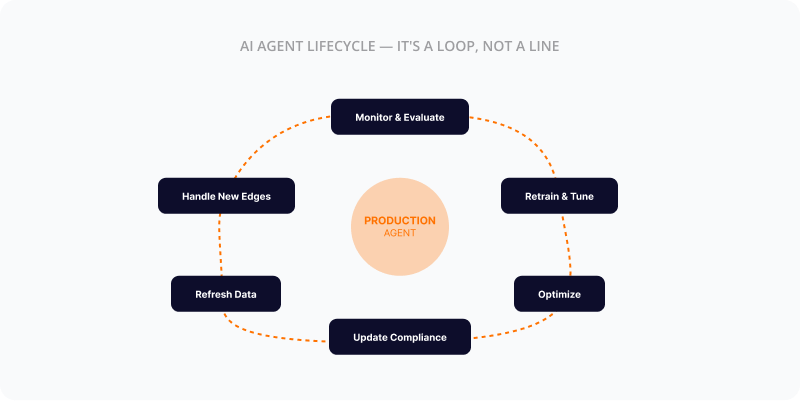
These differences mean that a single global compliance strategy is rarely sufficient. Firms must tailor their AI trading compliance 2026 protocols to each jurisdiction’s specific enforcement style. Ignoring these nuances can lead to significant regulatory penalties or operational restrictions.
Preparing for regulatory audits
As 2026 regulatory frameworks tighten, firms must shift from reactive compliance to proactive audit readiness. The new standards for AI trading compliance 2026 require that autonomous agents maintain a continuous, tamper-evident record of their decision-making processes. Auditors will no longer accept black-box summaries; they need granular access to the data lineage that feeds every trade execution.
Start by documenting your data integrity protocols. Ensure that every input source, model version, and parameter change is timestamped and linked to specific trading outcomes. This documentation serves as the primary evidence during regulatory reviews, demonstrating that your AI systems operate within defined risk boundaries. Without this granular trail, firms risk significant penalties for non-compliance with transparency mandates.
Integrate automated reporting tools that align with the latest jurisdictional requirements. These tools should generate real-time audit logs that mirror the structure expected by regulators. By automating the collection of compliance data, firms reduce the risk of human error and ensure that reports are always current and accurate. This approach not only streamlines the audit process but also builds trust with regulatory bodies.
Frequently asked questions about AI trading compliance 2026
The regulatory landscape for autonomous agents is shifting rapidly. These questions address the specific applicability of new rules, enforcement timelines, and technical requirements for AI trading compliance 2026.
No comments yet. Be the first to share your thoughts!