
AI trading bot safety 2026
The promise of automated trading often masks significant operational risks. While AI bots can execute trades faster than humans, they also carry dangers including technical errors, fraud, cybersecurity vulnerabilities, and unexpected losses. In 2026, the primary safety constraint is not just algorithmic performance, but the integrity of the broker’s compliance framework surrounding it.
Regulatory bodies are tightening oversight on algorithmic trading. Brokers must now demonstrate that their AI tools do not engage in market manipulation or excessive overtrading that harms retail investors. If a bot glitches and triggers a cascade of sell orders, the broker is liable for the resulting chaos. This shifts the burden of safety from the user to the platform.
Before deploying an AI bot, verify that your broker has clear risk controls. Look for features like daily loss limits, maximum position sizes, and circuit breakers that pause trading during extreme volatility. These safeguards act as a safety net, preventing a single technical failure from wiping out your account.
The most successful trading bots are those used within a compliant ecosystem. They do not operate in a vacuum but are integrated into a broker’s risk management system. This integration ensures that while the AI handles the speed, the broker handles the safety.
Safety tradeoffs in AI trading bots
Using an AI trading bot is rarely a simple choice between safety and speed. You are trading direct human oversight for algorithmic execution speed and emotional detachment. The core risk is not just market volatility, but the structural vulnerabilities introduced by connecting your brokerage account to a third-party API.
When you authorize a bot to trade on your behalf, you grant it permissions to place orders, modify positions, and sometimes withdraw funds. If the bot malfunctions or the API connection is compromised, the damage can happen in seconds. Regulatory bodies like the SEC and CFTC are tightening rules on these automated systems, but the onus remains on the user to configure safety limits correctly.
The most common failure points fall into three categories: technical errors, over-optimization, and cybersecurity gaps. A bot that backtests perfectly in a calm market may overtrade or freeze during high volatility. A secure bot with poor risk management parameters can still drain an account. Evaluating these tradeoffs requires looking at specific operational features rather than marketing claims.
| Feature | Benefit | Risk |
|---|---|---|
| API Key Permissions | Enables automated execution | Excessive permissions allow unauthorized withdrawals or full account control if keys are leaked |
| Stop-Loss Orders | Caps maximum loss per trade | "Slippage" during market gaps can cause actual exit prices to be worse than the stop-loss level |
| Backtesting History | Validates strategy logic against past data | Overfitting creates a strategy that looks perfect historically but fails in live market conditions |
| 24/7 Monitoring | Catches opportunities outside market hours | "Ghost trades" or duplicate orders may occur if the bot reconnects improperly after a disconnect |
The table above highlights the direct tradeoffs you face when configuring your bot. Notice how every benefit carries a specific, active risk. For example, while API permissions are necessary for automation, they are the primary vector for account theft. Always use "read-trade" only API keys and never enable withdrawal permissions for any trading bot.
Similarly, stop-loss orders are a critical safety net, but they are not absolute guarantees. In fast-moving markets, your sell order may execute at a significantly lower price than your set limit, a phenomenon known as slippage. Understanding this limitation is part of the safety evaluation process.
How to vet an AI trading bot before funding it
Choosing an AI trading bot is less about finding the "best" one and more about filtering out the noise. The market is flooded with tools promising outsized returns, but compliance and user safety depend on your ability to distinguish legitimate algorithmic infrastructure from marketing hype. This framework helps you evaluate bots based on transparency, risk controls, and regulatory standing.
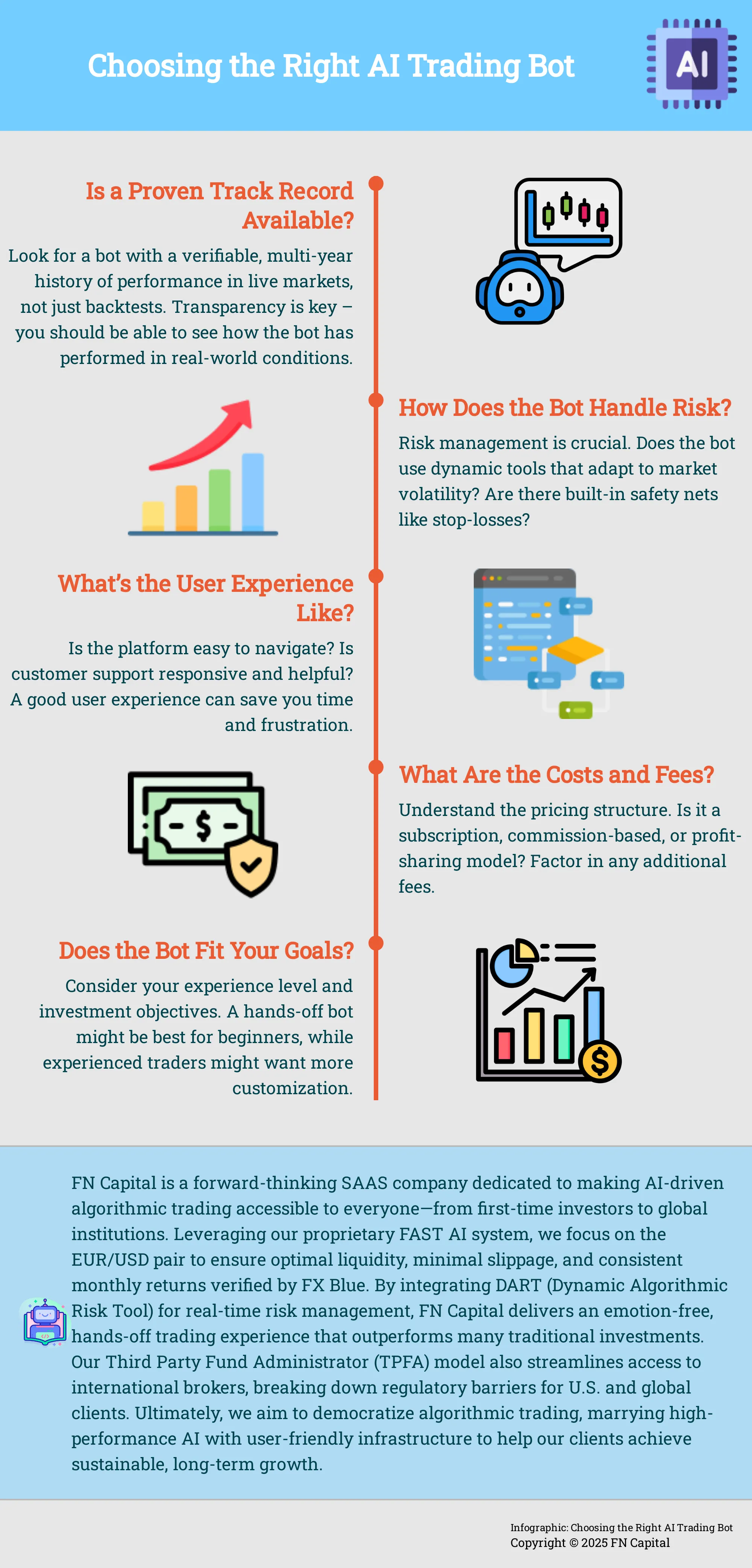
Most successful bots operate under strict regulatory oversight. In 2026, legitimate platforms disclose their data providers and are registered with bodies like the SEC, FCA, or CySEC. Avoid bots that claim "proprietary black-box" algorithms without any third-party audit trail. If a bot cannot show you who provides its market data or how it handles compliance reporting, treat it as a high-risk liability rather than an investment tool.

A compliant bot must have hard-coded risk parameters that you cannot override. Look for features like maximum daily loss limits, position sizing caps, and automatic circuit breakers that halt trading during volatility spikes. Without these guardrails, an AI model can overtrade or chase losses, leading to unexpected account wipeouts. The best tools allow you to set these limits as non-negotiable constraints, ensuring the AI works within your safety boundaries.
Never fund a live account immediately. Use the bot’s paper trading mode to run it through at least 30 days of live market conditions. This step reveals how the AI handles slippage, execution delays, and edge-case market events that backtests often ignore. Compare the paper trading results against the bot’s advertised performance; significant deviations here are a major red flag for potential fraud or poor algorithmic design.

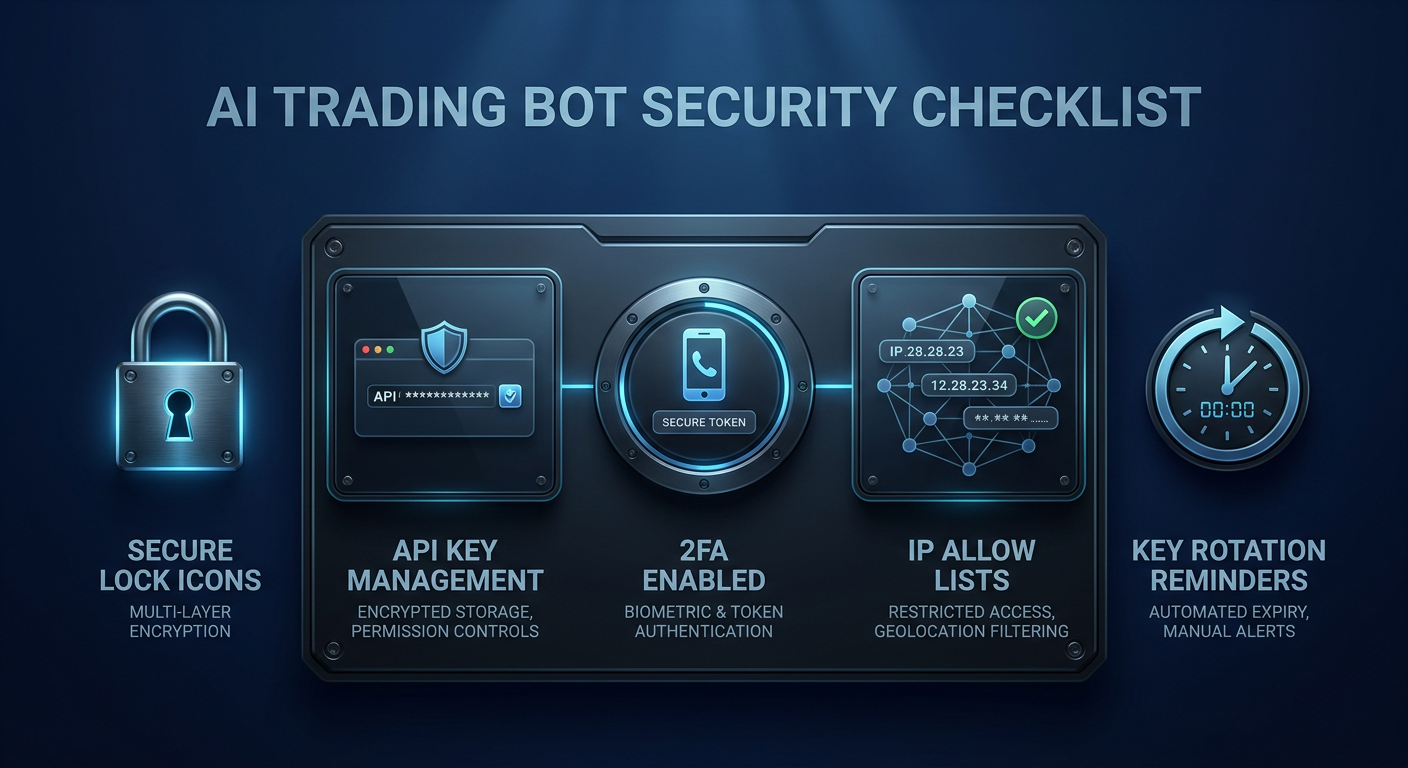
Bots connect to your broker via API keys, which grant them trading access. Ensure the bot provider uses read-only keys for monitoring and limited trading permissions for execution. Avoid platforms that request full account access, including withdrawal rights. Check if the provider stores your API keys in encrypted, isolated environments. A breach in their security infrastructure can lead to direct theft from your brokerage account, making this the most critical technical check.
Spot the weak options
Not every AI trading bot delivers on its promises. Many platforms use vague language to mask basic algorithmic strategies or hide high-risk settings behind a polished interface. For broker compliance and user safety, recognizing these weak options is the first line of defense.
Watch out for bots that promise guaranteed returns or "insane profits." These claims are red flags for misleading marketing. Legitimate tools emphasize risk management, transparency, and realistic performance metrics. If a platform cannot clearly explain its strategy or provide verifiable audit trails, it likely poses significant compliance risks.
Another common mistake is ignoring the fine print on fees and data usage. Some bots charge hidden subscription fees or sell your trading data to third parties. Always read the terms of service carefully. Look for clear disclosures about how your funds are protected and how the bot executes trades. If the information is buried or unclear, it is a weak option that could compromise your safety.
No comments yet. Be the first to share your thoughts!