

Bitcoin hovers at $69,080.00 amid subtle 24-hour dips of $549.00, a reminder that even at peak valuations, crypto markets harbor bear market threats capable of wiping out leveraged positions overnight. Autonomous crypto trading agents promise efficiency, yet without robust risk guardrails crypto trading demands, they amplify liquidation risks in volatile downturns. Drawing from my 15 years in asset management, I've seen speculation devour capital; true resilience lies in disciplined protocols that prioritize preservation over pursuit of gains.
Recent analyses underscore this urgency. Leveraged trading on exchanges exposes positions to sudden wipes, as noted in discussions on cryptocurrency volatility. DeFi's growth invites regulatory scrutiny, demanding strong guardrails for stability. The 2025 crypto flash crash highlighted unregulated leverage's perils, where absent stress controls triggered cascading liquidations. For autonomous crypto trading agents, integrating such safeguards isn't optional; it's foundational to surviving bear phases.
Leverage Traps: Why Autonomous Agents Face Liquidation Peril
Crypto's hallmark volatility, paired with high leverage, turns minor corrections into existential threats. At Bitcoin's current $69,080.00, a 10% drop could liquidate 10x leveraged longs if maintenance margins falter. Traditional traders panic-sell; agents, if unbridled, execute relentlessly into the abyss. Reports from arXiv benchmarks reveal that risk control capability dictates an agent's cross-market robustness, with superior protocols yielding excess returns precisely because they evade blowups.
Institutional voices echo this. Federal Reserve insights call for guardrails ensuring market integrity, while Treasury reports warn of automated derivatives triggering spot market cascades. My conservative lens aligns: patience trumps speculation. AgentTraderGuard. com exemplifies this by embedding kill-switches and compliance, preventing agents from overextending in euphoria-fueled rallies that precede bears.
Position Sizing and Diversification: The First Line of Defense
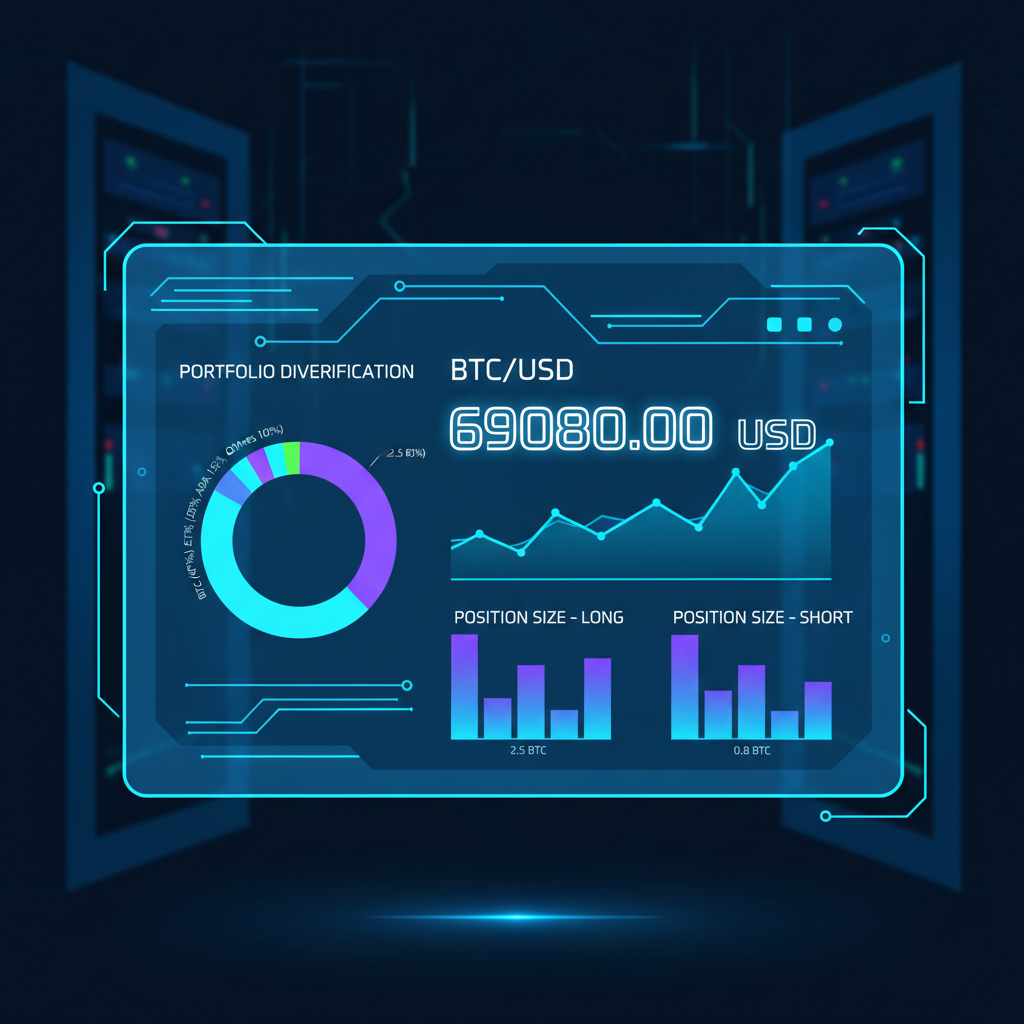
No guardrail outperforms prudent allocation. Limiting single-asset exposure to 2-5% of portfolio, diversified across Layer-1s, DeFi, stablecoins, and blue-chips, cushions downturns. For autonomous agents, dynamic position sizing algorithms adjust based on volatility metrics like ATR, ensuring no bet overwhelms the whole.
Consider a bear scenario: Bitcoin slumps from $69,080.00, dragging alts. An agent diversified holds firm, as stablecoin anchors preserve capital for opportunistic buys. Epiq Trading Floor strategies affirm this mitigates adverse moves, while Changelly's 2025 tips stress beginner-proof tools to sidestep mistakes. At AgentTraderGuard, we enforce such caps, rejecting trades breaching thresholds - a discipline human traders rarely match.
Stop-Loss Precision and Take-Profit Discipline in Agent Protocols
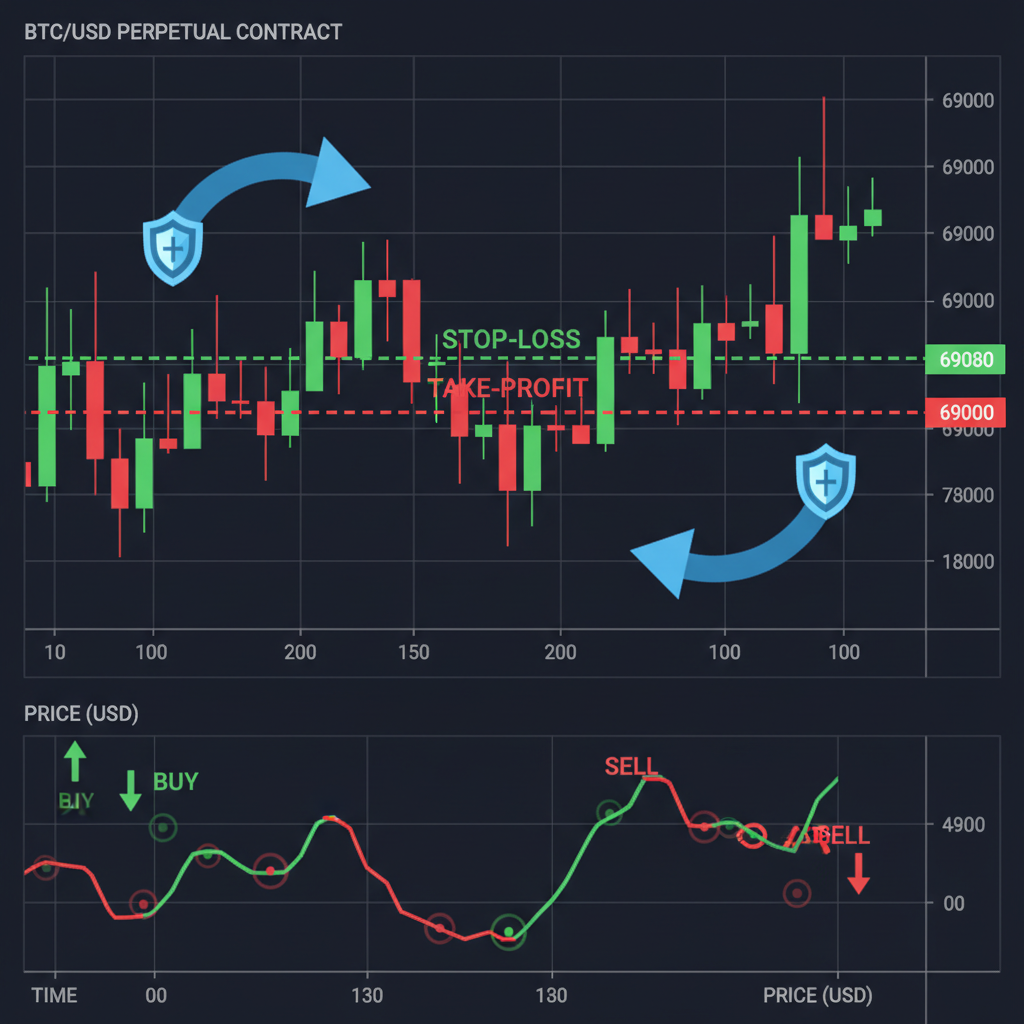
Automated exits via stop-loss and take-profit orders form the agent's nervous system. Set stops at 5-10% below entry, trailing dynamically in uptrends, they cap losses mechanically. Analytics Insight outlines survival strategies hinging on these, automating what emotions sabotage.
Opinion: Too many agents ignore trailing stops, courting drawdowns. Pair with take-profits at 2-3x risk-reward ratios for asymmetric upside. In bear tests, this preserves capital for dividend-like yield farming in stable assets, aligning with my value investing ethos. Jenova. ai's institutional agents incorporate such, benchmarking against flash crashes.
Bitcoin (BTC) Price Prediction 2027-2032: Bear Market Scenarios with Risk Guardrails
Predictions from 2026 baseline of $69,080, incorporating mild (-20%) and severe (-50%) drops mitigated by autonomous trading agent strategies
| Year | Minimum Price (Severe Bear) | Average Price | Maximum Price (Bull Recovery) | YoY % Change (Avg) | Scenario Insights |
|---|---|---|---|---|---|
| 2027 | $35,000 | $55,000 | $75,000 | -20% | Severe bear (-50% potential mitigated to -49%); stop-loss and hedging prevent liquidation |
| 2028 | $45,000 | $70,000 | $95,000 | +27% | Halving catalyst; position sizing and diversification stabilize portfolio |
| 2029 | $60,000 | $95,000 | $130,000 | +36% | Early bull recovery; algorithmic models enable consistent gains |
| 2030 | $75,000 | $120,000 | $165,000 | +26% | Institutional adoption accelerates; real-time shock detection protects |
| 2031 | $95,000 | $150,000 | $205,000 | +25% | Regulatory clarity reduces risks; adaptive strategies optimize |
| 2032 | $115,000 | $180,000 | $250,000 | +20% | Mainstream integration; guardrails ensure long-term resilience |
Price Prediction Summary
Bear markets pose risks of 20-50% drawdowns, but autonomous agents with guardrails like stop-loss, hedging, and diversification limit losses and enable recoveries. Long-term bullish outlook driven by halving cycles and adoption, with average BTC price rising from $55K in 2027 to $180K by 2032.
Key Factors Affecting Bitcoin Price
- Market cycles including 2028 halving
- AI-powered risk management (stop-loss, take-profit, hedging)
- Regulatory developments and DeFi scrutiny
- Diversification across crypto sectors
- Real-time monitoring and adaptive strategies
- Institutional adoption mitigating volatility
Disclaimer: Cryptocurrency price predictions are speculative and based on current market analysis. Actual prices may vary significantly due to market volatility, regulatory changes, and other factors. Always do your own research before making investment decisions.
Hedging elevates this further; short futures offset long spots, neutralizing downside without selling core holdings. Yet implementation demands nuance - over-hedging erodes gains. Real-time shock detection, per arXiv, decouples risk from strategy loops, triggering interventions instantly.
Autonomous agents thrive when risk models predict volatility spikes before they cascade. Drawing from arXiv's AI-Trader benchmarks, those with superior risk control capability not only sidestep liquidations but post excess returns, proving guardrails amplify alpha in chaos. AgentTraderGuard. com pioneers this by fusing machine learning with conservative thresholds, mirroring my bond portfolio discipline where drawdown limits never exceed 5%.
Kill-Switches and Compliance Protocols: Non-Negotiable Circuit Breakers
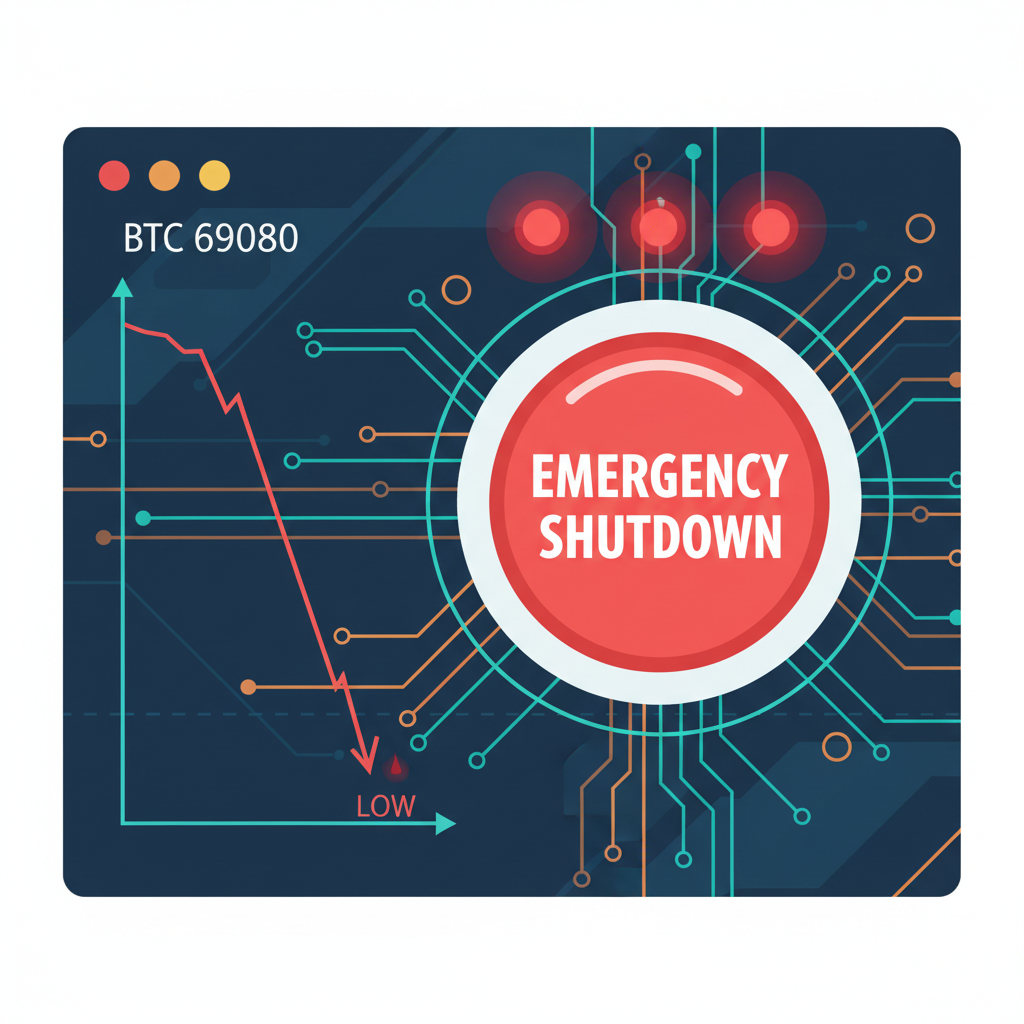
Picture Bitcoin dipping from $69,080.00 toward its 24-hour low of $68,371.00; without intervention, leveraged longs evaporate. Enter trading agent kill-switches, hard-coded halts that freeze all positions upon breaching volatility bands or drawdown caps. These aren't mere pauses; they enforce portfolio-wide reviews, preventing re-entry until stability returns. SEC's 2025 flash crash postmortem validates this: absent such controls, leverage spirals unchecked.
In my view, kill-switches embody true prudence. They override even the most aggressive strategies, aligning with Federal Reserve calls for safety guardrails. Paired with compliance protocols scanning for regulatory red flags, like excessive DeFi leverage, they shield against both market and legal pitfalls. Treasury reports on digital asset risks highlight automated liquidations' contagion; our platform's kill-switches decouple this, preserving capital for patient rebounds.
Adaptive multi-strategy agents take this further, dynamically pivoting from momentum to mean-reversion amid bears. Jenova. ai's institutional frameworks show these outperform static bots, reallocating to yield-bearing stables when BTC tests $68,371.00 lows. Discipline here means algorithms that learn from shocks, not chase them.
Real-Time Monitoring: Eyes on the Horizon
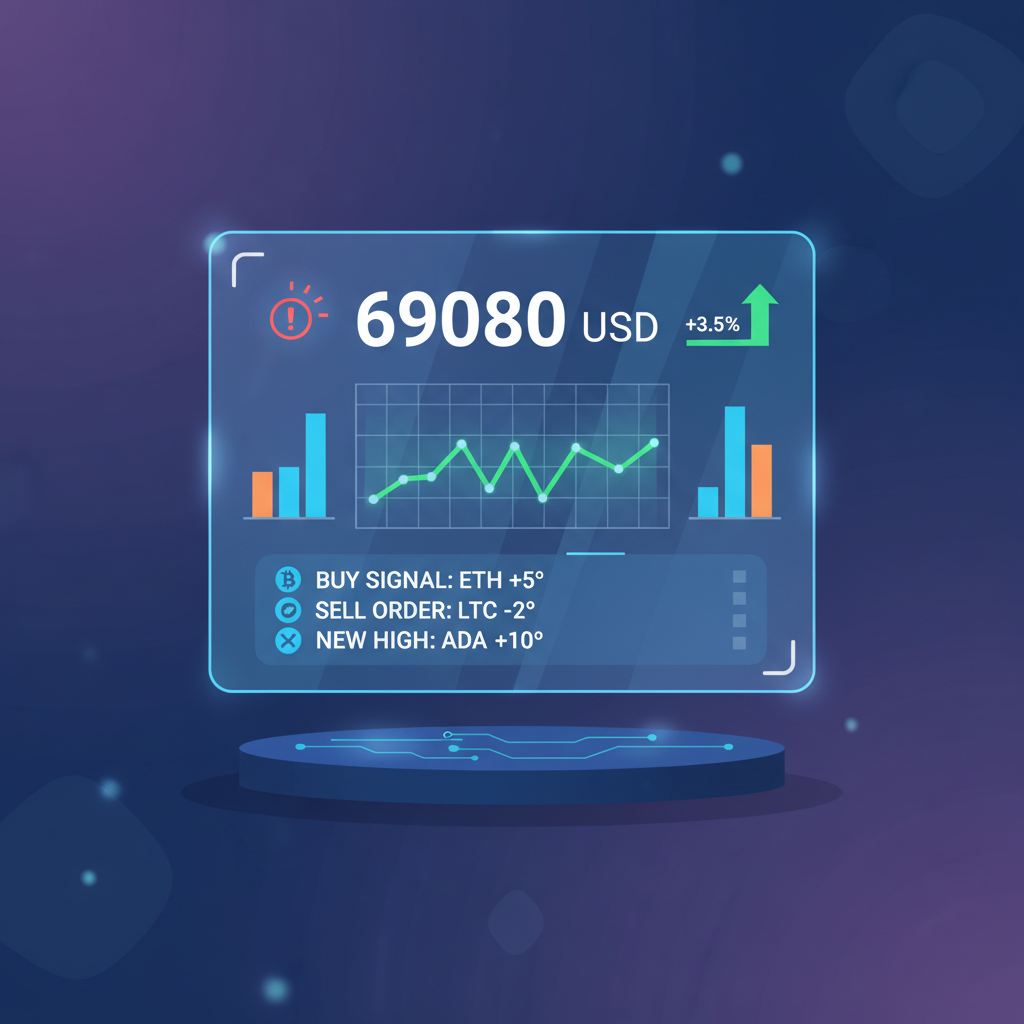
Vigilance defines survival. Real-time systems scan order books, funding rates, and sentiment feeds, flagging anomalies like the subtle -0.007880% BTC drift. Decoupling detection from execution, as arXiv advocates, lets agents react in milliseconds - slashing positions before exchanges force liquidations. Changelly's strategies reinforce this: tools spotting over-leverage save novices and pros alike.
Opinion: Humans falter under fatigue; agents excel with unflagging watch. Integrate shock absorbers like dynamic leverage reducers, scaling exposure inversely with VIX analogs. At current levels, with BTC's high at $71,029.00 fresh in memory, this preempts reversals, turning volatility into controlled opportunity.
Building Resilient Agents: A Practitioner’s Blueprint
Conservative investing whispers: structure beats speculation. For AI trading liquidation prevention, embed guardrails from inception. Position sizing caps exposure; stops enforce exits; hedges balance bets; kill-switches halt madness. Diversification across assets dilutes single-point failures, while algorithmic oversight ensures fidelity.
Bear markets test mettle. When BTC lingers near $69,080.00 yet eyes deeper corrections, crypto bear market protection via autonomous agents hinges on these layers. My career affirms: portfolios enduring 50% drawdowns intact compound superiorly. AgentTraderGuard. com delivers this edge, revolutionizing trades with precision safety nets.
Configuring Ironclad Risk Guardrails for Autonomous Crypto Agents
Markets evolve, but principles endure. Robust risk guardrails crypto trading empowers autonomous crypto trading agents to navigate downturns unscathed, capitalizing on rebounds with capital preserved. In crypto's wild arenas, this disciplined core unlocks sustainable prosperity, much like timeless value plays outpace fleeting trends.


No comments yet. Be the first to share your thoughts!