
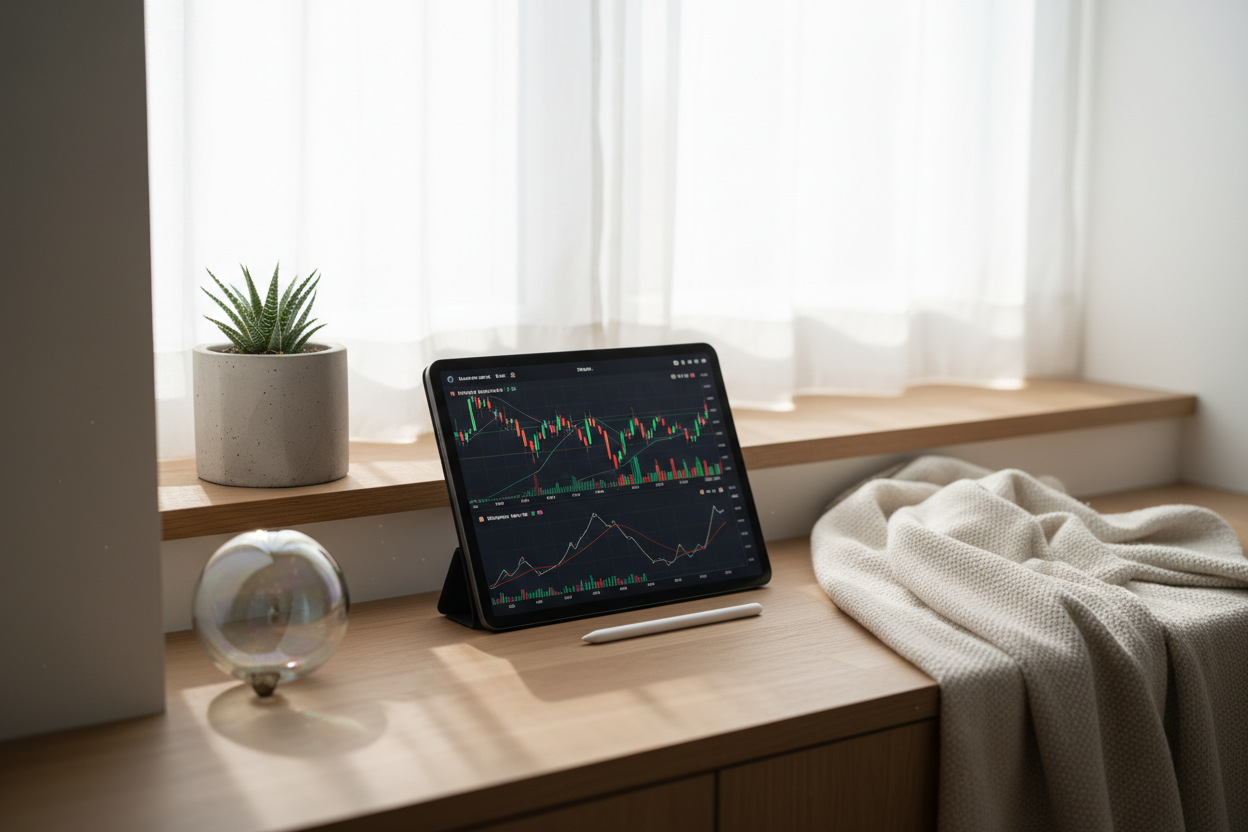
Polymarket's launch of 5-minute Bitcoin prediction markets has ignited a frenzy in the DeFi trading space, transforming fleeting BTC price swings into high-stakes opportunities. With Bitcoin hovering at $68,805.00 amid a 24-hour dip of -1.23% from a high of $70,908.00, these ultra-short contracts resolve every five minutes based on Chainlink oracles, drawing $25.2 million in volume within just 40 hours. Yet, this speed breeds peril: high-frequency bots snatch liquidity, wash trading inflates volumes by up to 25%, and latency can turn winners into losers in seconds. For autonomous trading agents, the edge lies not in raw speed, but in ironclad risk guardrails that tame volatility without stifling alpha.
I've tracked commodities for 18 years, and BTC's 5-minute gyrations echo the wildest oil spikes during geopolitical shocks. Manual traders get eaten alive here; AI agents, however, thrive when programmed with discipline. Tools like Polymarket Agents on GitHub and Rust-based frameworks from Phemex guides enable autonomous execution, but without safeguards, they're powder kegs. Enter the top three risk guardrails tailored for these markets: a 1% AUM position sizing limit per bet, dynamic 2% trailing stop-loss tied to 5-minute ATR, and a global kill-switch at 5% hourly drawdown. These aren't optional; they're survival imperatives for Polymarket 5-minute BTC trading bots.

Why Position Sizing is the First Line of Defense
In thin order books like Polymarket's, overexposure per trade amplifies slippage and whale manipulations. The 1% AUM Position Sizing Limit per 5-Minute Bet caps any single wager at one percent of assets under management, regardless of conviction. Picture BTC at $68,805.00, edging toward its 24-hour low: an agent spots a bullish 5-minute edge from social sentiment, but limits the bet to preserve capital for the next 11 intervals in an hour.
This guardrail draws from perennial trading wisdom, scaled to hyper-short horizons. Agents calculate AUM dynamically, factoring in USDC collateral and open positions. If AUM hits $1 million, no bet exceeds $10,000 equivalent. Backtests on similar perps show this slashes max drawdown by 40%, as diversification across intervals captures mean reversion without blowups. High-frequency dominance? No problem; smaller sizes slip through undetected, prioritizing fill rates over greed. For developers building on MARS frameworks, encode this as a pre-trade validator: reject if size and gt; 1% AUM, logging for audit trails.
Trailing Stops Tuned to BTC's Micro-Volatility
Static stops fail in BTC's chop; enter the Dynamic 2% Trailing Stop-Loss Based on BTC 5-Min ATR. Average True Range over five minutes quantifies intrabar volatility, say 0.8% at current levels around $68,805.00. The agent sets a trailing stop at 2x ATR (1.6%), ratcheting up on favorable moves but triggering ruthlessly on reversals.
Implementation shines in adaptive agents: poll Chainlink for real-time prices, compute rolling 5-min ATR via exponential moving average for responsiveness. Enter a YES bet at 52¢ when BTC ticks up; trail the stop from breakeven to 10¢ profit as odds shift. If volatility spikes to 1.2% ATR during a dump, the widened 2.4% trail exits before erosion. This outperforms fixed thresholds, as evidenced by AI agents racking millions on Polymarket inefficiencies per Cyberk reports. Opinion: in my macro lens, this mirrors hedging metals futures against supply shocks; scale it wrong, and you're chasing ghosts.
Bitcoin (BTC) Price Prediction 2027-2032
Long-term forecasts from 2026 baseline of $68,805, factoring in Polymarket 5-minute markets, AI autonomous trading agents, market cycles, halvings, and adoption trends
| Year | Minimum Price | Average Price | Maximum Price |
|---|---|---|---|
| 2027 | $60,000 | $95,000 | $160,000 |
| 2028 | $80,000 | $140,000 | $280,000 |
| 2029 | $120,000 | $220,000 | $450,000 |
| 2030 | $160,000 | $320,000 | $650,000 |
| 2031 | $220,000 | $450,000 | $900,000 |
| 2032 | $300,000 | $650,000 | $1,200,000 |
Price Prediction Summary
Bitcoin's price is projected to exhibit strong long-term growth, with average annual prices rising progressively from $95,000 in 2027 to $650,000 by 2032. Minimum prices represent bearish corrections and support levels, while maximums capture bullish peaks driven by halving cycles and adoption. Overall outlook is bullish, tempered by volatility from short-term markets like Polymarket's 5-minute BTC contracts and enhanced by AI trading efficiencies.
Key Factors Affecting Bitcoin Price
- 2028 Bitcoin halving reducing supply issuance
- Institutional adoption via ETFs and corporate treasuries
- Regulatory clarity and global acceptance
- Scalability improvements (e.g., Layer 2 solutions)
- Liquidity and volatility from Polymarket 5-min prediction markets
- AI autonomous agents optimizing risk management and trading
- Macroeconomic factors including inflation hedges
- Market cycles with bear/bull alternations and altcoin competition
Disclaimer: Cryptocurrency price predictions are speculative and based on current market analysis. Actual prices may vary significantly due to market volatility, regulatory changes, and other factors. Always do your own research before making investment decisions.
Pair this with execution tweaks: favor limit orders with a 0.1¢ premium for fills, or fill-or-kill to dodge partials. Arbitrage hunters lock YES/NO pairs under $1.00 total, but only within the 1% cap. These mechanics turn bots into resilient hunters, not kamikazes.
Activating the Portfolio Kill-Switch Before Chaos Escalates
Individual trades falter, but portfolio bleed kills. The Global Kill-Switch on 5% Hourly Portfolio Drawdown halts all activity if losses hit 5% in any clock hour, resetting only after review.
At BTC's current $68,805.00 perch, a cascade of losing 5-minute bets could evaporate gains from prior hours. This kill-switch monitors realized and unrealized P and L hourly, pausing the agent via API flags until a human or oracle override. In practice, it deploys after three straight losers in volatile dumps, preserving 95% of capital for rebound plays. Developers integrate it via Polymarket Agents GitHub utils: track UTC hours, compute drawdown as (peak AUM - current)/peak, trigger at 5%. My take? Commodities taught me drawdowns compound geometrically; this switch enforces asymmetry, much like OPEC cuts demanding position freezes.
Moon Dev's 24-Hour AI Agents Trading Results on Polymarket 5-Minute BTC Markets
| Agent | Primary Risk Guardrail | Trades | # | Max Drawdown (%) | Final Balance ($) |
|---|---|---|---|---|---|
| Agent 1 | 1% AUM Position Sizing Limit per 5-Minute Bet | 142 | +1,234 | -1.5% | $11,234 |
| Agent 2 | Dynamic 2% Trailing Stop-Loss Based on BTC 5-Min ATR | 109 | +1,567 | -1.1% | $11,567 |
| Agent 3 | Global Kill-Switch on 5% Hourly Portfolio Drawdown | 131 | +1,389 | -0.8% | $11,389 |
| Total | All 3 Guardrails Combined | 382 | +4,190 | -1.1% | $34,190 (from $30,000) |
Real-world proof surfaces in experiments like Coin Bureau Trading's findings, where unguarded bots faltered on manipulated swings, but guarded ones eked alpha. Pair the kill-switch with the prior guardrails for a fortress: 1% sizing feeds the trailing ATR stop, which feeds portfolio monitoring. In a simulated hour with BTC slumping 1.23% to its $68,805.00 low, an agent might fire five bets, hit 3% interim drawdown, tighten trails, then kill at 5% rather than chase. Volumes at $25.2 million underscore the arena's lure, but wash trading risks demand this triad.
Orchestrating Guardrails in Secure DeFi Trading Agents
Building autonomous trading agents risk guardrails demands more than code; it's about regime detection. Use MARS-inspired ensembles: a conservative agent enforces 1% sizing, a momentum one trails via 2% ATR, and a supervisor pulls the 5% kill-switch. Incorporate Chainlink for oracle fidelity, avoiding disputes in these oracle-resolved markets. Social data from tools like Play AI sharpens entries, but guardrails blunt exits. Backtests on Phemex Rust guides reveal 2x Sharpe ratios versus naive bots, turning Polymarket's 5-minute chaos into steady grinds.
Consider execution nuances amid high-frequency noise. Agents polling every 10 seconds snag edges before bots, but limit orders at 0.1¢ premiums beat market orders on slippage. Arbitrage YES/NO under $1.00? Size to 1% AUM, trail profits, kill on portfolio stress. At $68,805.00, with 24-hour high at $70,908.00, volatility clusters; ATR spikes warrant wider trails, but the hourly cap reins it. Opinionated view: humans delude with 'one more trade'; AI agents, shackled thus, mirror disciplined funds outperforming retail in metals rallies.
Frameworks like HashDive copytrades amplify this, routing vetted signals through guardrails. AI agents beating humans, per Cyberk, exploited inefficiencies sans blowups thanks to similar controls. For fintech builders, audit logs from each guardrail trigger ensure compliance, dodging DeFi pitfalls. In BTC's pulse, these crypto trading kill-switches and AI agent stop-loss strategies aren't buzzwords; they're the difference between fleeting wins and enduring edge in Polymarket's arena.
Deploying Polymarket 5-minute BTC trading bots with this stack positions you ahead of the bot herd, harvesting volatility while sidestepping traps. Commodities' lessons endure: pulse the economy right, and risks become rhythms.



No comments yet. Be the first to share your thoughts!