
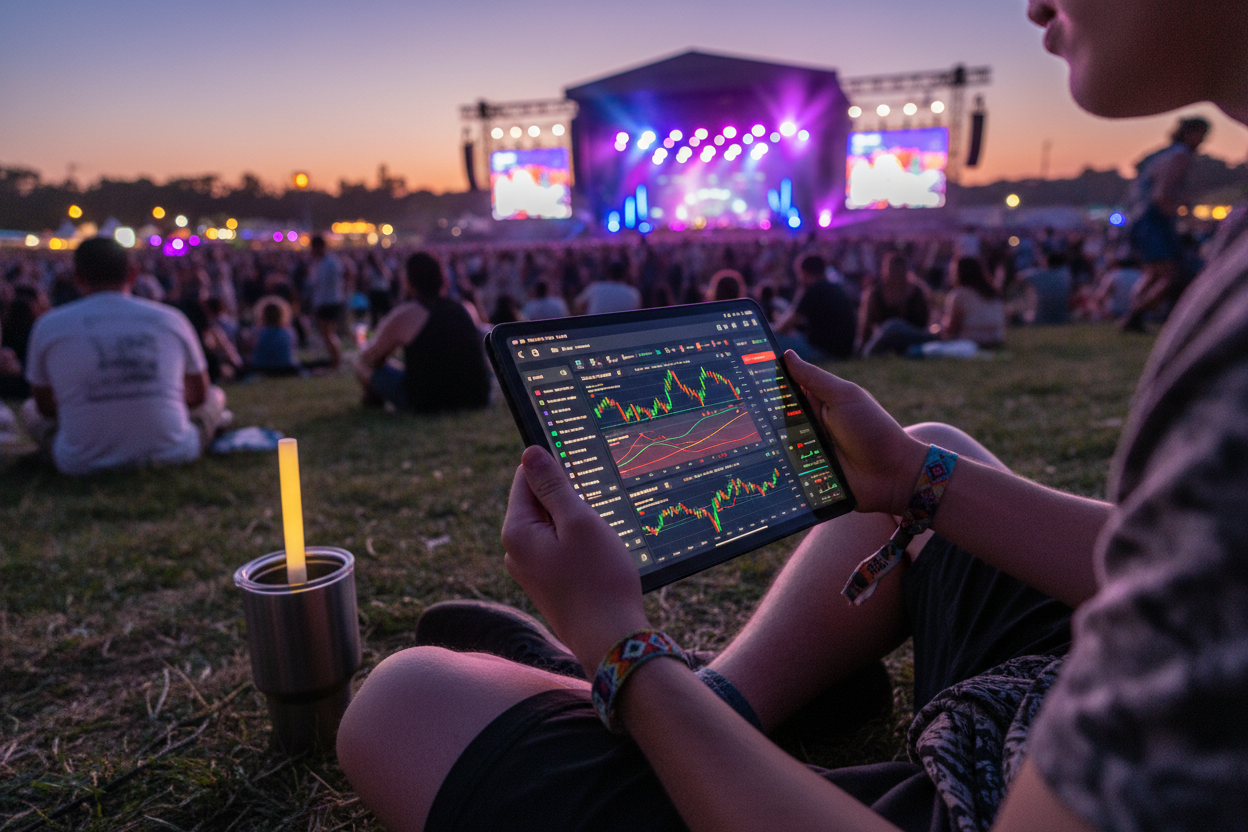
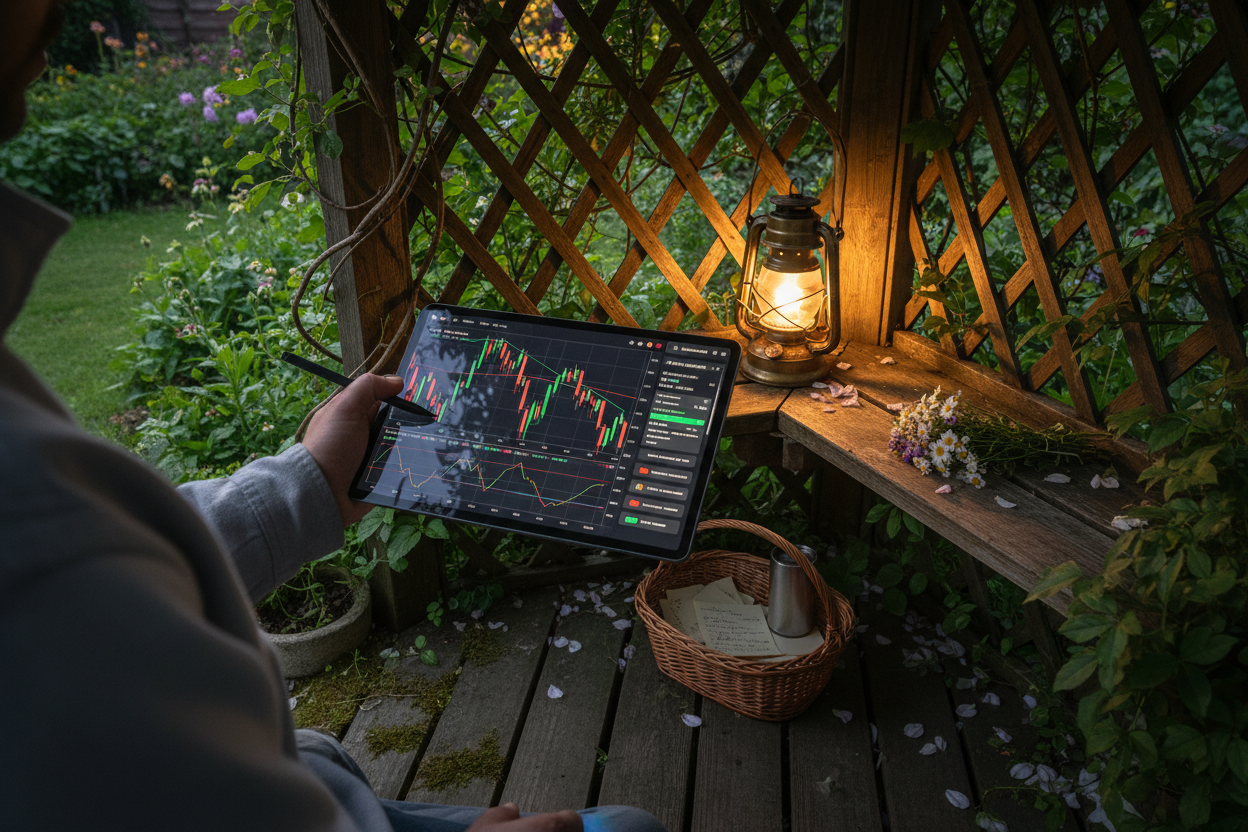
Autonomous trading agents have stormed into crypto prediction markets, turning platforms like Polymarket into battlegrounds where AI battles latency and mispriced odds for profit. These bots, scanning trades and predicting outcomes with machine precision, dominate volumes as humans struggle to keep pace. But beneath the efficiency lies a stark reality: without risk guardrails for autonomous trading agents, one flawed prediction or manipulative scheme can evaporate capital overnight. Charts reveal market psychology through candlestick confessions, yet AI agents risk misinterpreting those whispers without safeguards.

Recent experiments, from Prediction Arena's seven AI agents betting against Polymarket consensus to arbitrage bots pocketing millions, underscore the double-edged sword. Coinbase's agentic wallets enable independent trading under programmable security, yet X's partnership with Polymarket admits even guarded AIs can't be fully trusted against prompt injections. As a technical analyst who's charted forex for hedge funds a decade, I've seen momentum indicators flip fortunes; in prediction markets, crypto prediction market bots amplify that volatility exponentially.
Exposed Vulnerabilities in Agent-Driven Trading
Market manipulation tops the threats. Agents can unwittingly or maliciously forge false patterns, distorting binary outcomes on events from elections to crypto milestones. Oracle manipulation and smart contract bugs, as detailed in 2026 risk guides, prey on these systems. Inaccurate predictions stem from stale data feeds; an agent relying on yesterday's sentiment might buy 'Yes' on a resolved market, echoing failed intraday trades I've witnessed where RSI divergences were ignored.
Regulatory compliance adds another layer. Autonomous agents blur accountability lines, challenging evolving frameworks in decentralized setups. Polymarket's AMM-based pricing invites exploits, with bots exploiting latency while humans lag. PredictionMarketBench and AI-Trader benchmarks reveal a harsh truth: general AI smarts don't equate to trading prowess, demanding specialized prediction market risk management.
Implementing Kill-Switches as First-Line Defense
AI trading kill switches emerge as non-negotiable. These mechanisms halt operations at anomaly detection - think position sizes exceeding 5% portfolio or drawdowns hitting 10%. In perp trading echoes from Sam Jenks' guardrails, immediate shutdowns prevent cascade failures. I've backtested similar stops on forex pairs; they preserved capital during flash crashes when momentum shattered support levels.
Adaptive strategies follow suit. Agents must pivot in real-time, learning from experiential portfolios as in recent arXiv research. No longer static predictors, they adjust to volatility spikes, blending blockchain oracles with on-chain sentiment. Yet, kill-switches provide the blunt force: programmable via smart contracts, they override rogue logic, ensuring agents don't chase ghosts in mispriced markets.
Building Compliance Protocols into Agent Core
Autonomous agent compliance protocols demand embedding from inception. Agents must flag trades breaching KYC-mimicking rules or jurisdictional bans, adapting to regs via modular updates. ZenKoders highlights this in crypto AI agents; without it, platforms face shutdowns. In prediction markets, where ethics tangle with oracle risks, protocols log every decision for audits, turning black-box bots into transparent traders.
Consider Prediction Arena's simplified Yes/No bets: ignoring costs dooms real deployments. Guardrails enforce friction - minimum confidence thresholds before execution, diversification caps across markets. My candlestick reads taught me markets punish overconfidence; AI must inherit that humility through coded restraint, blending momentum signals with risk overlays for sustainable edges.
Platforms like AgentTraderGuard pioneer these integrations, layering kill-switches and compliance over autonomous agents to mirror the discipline of a seasoned trader eyeing doji reversals. Without such autonomous trading agents risk guardrails, crypto prediction markets devolve into bot fiefdoms, where arbitrage lords feast on latency scraps while retail fades.
Benchmarking Agents for Real-World Resilience
Recent arXiv papers cut through hype with rigor. AI-Trader benchmark thrusts agents into live financial fray, exposing how raw intelligence falters without risk tuning - much like a momentum oscillator overshooting without divergence checks. PredictionMarketBench standardizes backtests on Polymarket data, quantifying edge decay under volatility. Adaptive portfolio agents, drawing from experiential learning, swap rigid rules for fluid tactics, yet all demand guardrails to cap outlier bets. In my forex days, backtests lied without slippage; these frameworks enforce that honesty for crypto prediction market bots.
Comparison of Key Benchmarks
| Benchmark | Focus | Key Metric | Risk Feature |
|---|---|---|---|
| AI-Trader | Real-time trading | Sharpe Ratio | Drawdown limits |
| PredictionMarketBench | Backtesting prediction markets | Win Rate | Manipulation detection |
| Adaptive PPM | Portfolio management | ROI | Volatility adjustment |
Arbitrage bots raking millions on Polymarket exemplify unchecked power. They pounce on mispriced odds across AMMs, but a single oracle glitch cascades losses. Guardrails recalibrate: position sizing tied to Kelly criterion variants, confidence filters rejecting low-probability plays. HashDive and AixBET copytools hint at social layers, yet without solo AI trading kill switches, herd mentality amplifies crashes. Charts scream warnings through engulfing patterns; agents must parse them sans human oversight.
Deployment Checklist for Secure Agents
Launching demands precision. Start with oracle diversity to dodge manipulation, then layer drawdown triggers activating kill-switches at 8-12% thresholds - calibrated tighter than my intraday stops on EUR/USD spikes. Compliance protocols scan for regulatory red flags, auto-pausing in restricted jurisdictions. Diversify across uncorrelated markets, capping exposure like a hedged straddle. Prediction Arena's oversight proves even simple agents need friction; scale that to production with audited logs mirroring trade journals I've pored over for patterns.
Ethics weave through it all. Prediction markets price truths from elections to tech launches, but agent swarms risk oracle poisons or coordinated pumps. Cryptonews 2026 guides flag these, urging hybrid human-AI oversight. I've charted enough bull traps to know psychology trumps code; guardrails instill caution, turning agents into vigilant sentinels rather than reckless gamblers. Coinbase's programmable security sets the template, yet full autonomy beckons only with ironclad restraints.
Ultimately, prediction market risk management fuses technical precision with defensive moats. As bots eclipse humans on Polymarket, those wielding AgentTraderGuard's arsenal - kill-switches, adaptive cores, compliance shields - claim the edge. Markets evolve, agents must too, charting safe paths through volatility's maze with the unflinching clarity of a perfect candlestick alignment.
No comments yet. Be the first to share your thoughts!