
The rise of phantom AI bots
The landscape of investment fraud has shifted violently. In 2025, AI-driven scams surged 1,210%, far outpacing the 195% growth in traditional fraud, according to Vectra AI. This acceleration is not a temporary spike; projected losses from these sophisticated schemes could reach $40 billion by 2027.
Scammers are no longer relying on simple phishing emails. They are deploying fake trading agents that mimic legitimate financial platforms with unsettling precision. These phantom bots promise passive income and unachievable returns, leveraging deepfakes and synthetic voices to build false trust. As the Australian Securities and Investments Commission (ASIC) has noted, it is highly unlikely that these AI-powered trading bots actually exist or deliver the promised results.
The mechanism is designed to bypass skepticism. A victim interacts with a dashboard that shows consistent, high-yield gains, all managed by an "AI" that never sleeps. The interface is polished, the language is professional, and the urgency is manufactured. By the time the platform disappears with the funds, the evidence is often encrypted or hosted on servers in jurisdictions with no enforcement leverage.
This is not a niche threat; it is the new baseline for online investment fraud. Recognizing the mechanics of these phantom bots is the first step in building your guardrails.
Verify the broker's regulatory status
Before connecting any funds, confirm the platform is licensed by a recognized financial authority. Scammers often clone legitimate broker websites or use deepfake videos to mimic compliance officers. If the regulator cannot be found in an official public database, the platform is operating illegally.
Locate the regulatory body for the broker’s claimed jurisdiction. In the United States, check the SEC’s Investment Adviser Public Disclosure database or the CFTC’s NFA database. For UK-based entities, use the FCA register. For Australian firms, consult the ASIC register. Do not rely on links provided on the trading platform’s footer; navigate directly to the regulator’s official website.
Enter the broker’s registration or license number into the regulator’s search tool. Legitimate firms must display this number prominently on their website and marketing materials. If the search returns no results, or if the license is suspended or expired, the platform is not authorized to offer trading services to retail clients.
Ensure the regulatory body actually has authority over the entity you are dealing with. Scammers often claim to be regulated by offshore jurisdictions with weak oversight, such as St. Vincent and the Grenadines, while targeting clients in the US or UK. The DFPI has warned that many AI investment scams claim to be licensed by legitimate bodies but are actually impersonating them. If the jurisdiction does not match your location or the broker’s primary claim, walk away.
Test with a small withdrawal
Verification is not complete until you can actually move money. Many AI trading scams operate on a "pump and dump" or "withdrawal fee" model. They allow you to deposit and even show small profits to build trust, but block withdrawals until you pay more.
Transfer a small sum, such as $100, using a credit card or bank transfer. Avoid wire transfers or cryptocurrency for initial deposits if possible, as they are harder to reverse. This amount should be small enough that you can afford to lose it entirely.
After a short period, request to withdraw your entire balance, including any "profits." Do not leave any funds in the account. Legitimate brokers process withdrawals within a few business days. If the platform demands you pay a "tax," "verification fee," or "minimum trading volume" to release funds, it is a scam.

Monitor the status of your withdrawal. If the platform delays the process indefinitely or asks you to deposit more to "unlock" the funds, cease all communication. Report the incident to your local financial regulator and your bank or credit card issuer immediately.
Inspect the trading dashboard for fake data
Scammers now build AI-generated fake trading dashboards that mirror real cryptocurrency exchanges and brokerages. Victims see fabricated balances growing in real time, creating a false sense of security before the platform vanishes. To protect your capital, you must verify the data source and inspect the interface for inconsistencies that reveal the deception.
Start by verifying the data feed. Legitimate platforms pull from regulated exchanges or major financial feeds. Scam dashboards often use static charts or delayed data that do not match live market prices. Cross-reference the asset’s price on a trusted site like CoinMarketCap or the official exchange. If the dashboard shows a different value, it is likely fabricated.
Next, inspect the interface for subtle errors. AI-generated interfaces often contain minor glitches: misaligned buttons, inconsistent fonts, or prices that update in perfect intervals rather than reflecting market volatility. Check the withdrawal history. Real platforms show processed transactions with blockchain hashes or bank reference numbers. Scam sites often display "pending" statuses indefinitely or use generic transaction IDs that do not resolve on block explorers.
Finally, test the system with a small withdrawal. This is the most reliable proof. Legitimate platforms process small withdrawals quickly. Scam dashboards will invent reasons for delay—taxes, verification fees, or technical issues—until you deposit more. If the platform resists letting you take your money out, it is a scam.
| Feature | Legitimate Platform | Scam Dashboard |
|---|---|---|
| Data Source | Real-time exchange feeds | Static or fabricated charts |
| Withdrawals | Processed with reference IDs | Pending or blocked indefinitely |
| Price Updates | Irregular, market-driven | Perfect intervals or delayed |
| Verification | Regulatory compliance visible | No regulatory footprint |
Test withdrawals before scaling up
Spotting AI Trading Scams works best as a clear sequence: define the constraint, compare the realistic options, test the tradeoff, and choose the path with the fewest hidden costs. That order keeps the advice usable instead of decorative. After each step, pause long enough to check whether the recommendation still fits the reader's actual situation. If it depends on perfect timing, unusual access, or a best-case budget, include a simpler fallback.

Spotting AI trading scam patterns
Scammers in 2026 leverage AI to mimic trusted relationships and authority figures. The goal is to lower your guard before asking for funds or credentials. Recognizing the specific mechanics of these scams allows you to pause and verify before acting.
Romance angles and "pig butchering"
Scammers build trust over weeks or months on social media or dating apps. Once rapport is established, they steer conversations toward investment opportunities. They often claim to use a proprietary AI trading bot with guaranteed returns. This "pig butchering" scheme relies on emotional manipulation rather than technical proof. You never meet the person, and the platform they share is usually fake.
Deepfake endorsements and authority
Fraudsters use AI to clone the voices and faces of financial experts or celebrities. You might see a video of a well-known investor endorsing a specific cryptocurrency or trading platform. These deepfakes are highly convincing but entirely fabricated. Always verify such endorsements through the official channels of the person or institution. If the claim appears on an unknown website or social media account, it is likely a scam.
Phantom AI trading bots
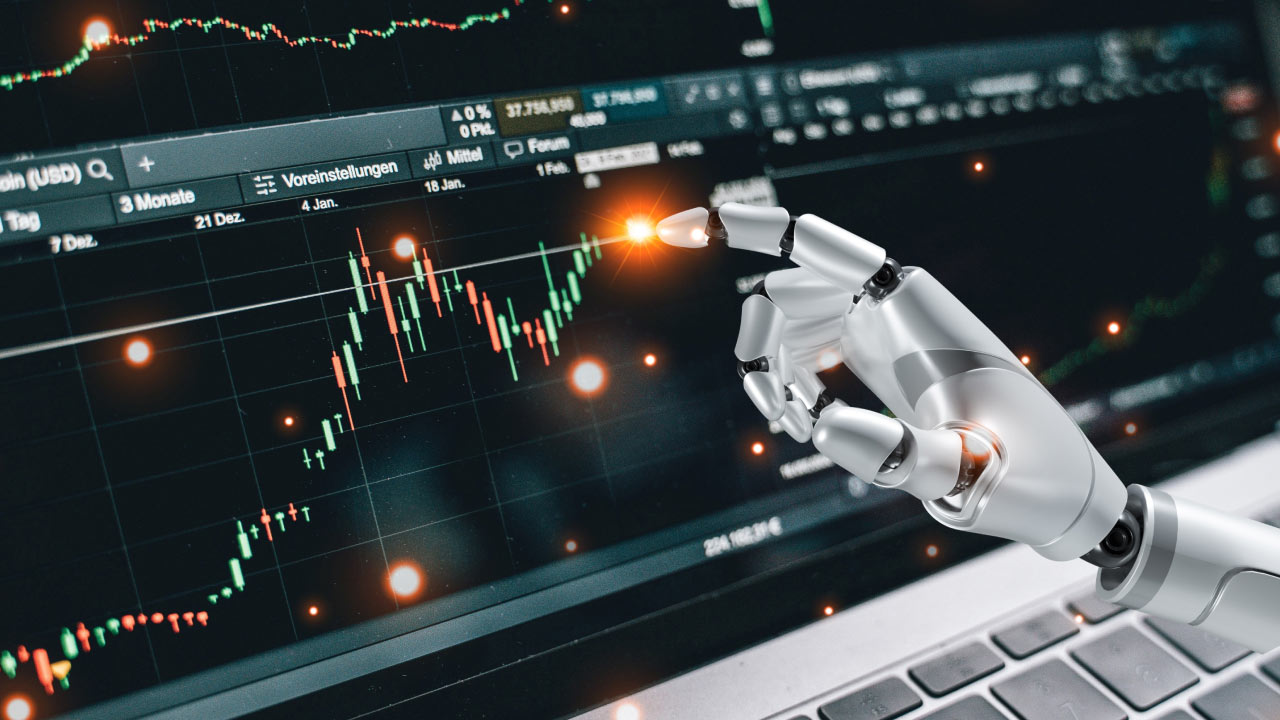
Some scams involve platforms that display impressive, real-time trading dashboards. These interfaces show consistent profits and sophisticated AI analytics. In reality, the data is pre-programmed to look successful. You may be able to deposit funds initially, but withdrawals are blocked by "technical errors" or "tax requirements." Legitimate trading bots do not guarantee returns or hide their underlying algorithms.
Never share private keys or seed phrases with any 'support agent' or 'trading bot' interface. No legitimate service will ever ask for this information.
Frequently asked: what to check next
Is it worth investing in AI in 2026?
Yes, but strictly through regulated channels. Morgan Stanley Research estimates that nearly $3 trillion of AI-related infrastructure investment will flow through the global economy by 2028, with more than 80% of that spending still ahead [Morgan Stanley Research]. The opportunity is real, but it belongs to infrastructure and verified asset managers, not retail "guaranteed return" bots.
How do I spot fake AI trading bots?
Scammers use deepfakes and fake dashboards to mimic success. The California DFPI warns that platforms claiming to use AI for automated profits are often targeting retail investors with fabricated results [DFPI]. Always verify the broker’s license in your state’s regulator database before depositing funds. If the platform cannot produce a regulatory ID, it is likely a scam.
Why are AI investment scams rising so fast?
AI scams surged 1,210% in 2025, far outpacing the 195% growth in traditional fraud, with projected losses reaching $40 billion by 2027 [Vectra AI]. The speed of AI allows fraudsters to personalize lures at scale, making detection harder for traditional security tools. Trust, not technology, is your primary guardrail.
No comments yet. Be the first to share your thoughts!